I came across Dr. King’s sermon “The Drum Major Instinct” about 4 years ago. He preached this sermon at Ebenezer Baptist Church on February 4th, 1968. This is two months before he was assassinated in Memphis. In this sermon he references what he would like people to say about his life during his eulogy, which makes it especially prophetic.
If you have never read this or heard this, I hope you delve into it. There’s so much in here about servanthood, consumerism, posturing, classism, the evil of supporting oppressors, all woven together in a richly told sermon. How I have been reflecting on it in recent days has been the part about what true greatness looks like, and how that relates to what I would want said at my funeral. Like Dr. King, I’d like for someone to say that I did try to feed the hungry. I’d like for someone to say that I did try to love and serve humanity. I’d like for someone to say that I helped people get into housing, and that I met people where they were, on street corners or under bridges or wherever they were. I’d like for someone to say that I raised my kids to seek justice and to hate racism and to be anti-racist.
One of the classes I am teaching in the spring lends itself to this kind of reflective exercise. In Senior Capstone, we look at professional issues and their big project is a practice evaluation associated with their field placement. But there is also space in the course (and direction from the institution) to have students think about their mission in life, and to think about how they will live out their calling as they move toward graduation and a different phase of life. I have never had students listen to this sermon in full before, but this year I plan to, and I will ask them to use it as a foundation for writing their mission statement and thinking about what it means to have a life well lived.
And, if I want those things to be said at my eulogy, what do I need to keep doing this year? What do I need to be doing differently this year? If my students want to live out their mission fully, what do they need to be doing differently? How can we encourage and support each other in this?
One of my goals over the break between semesters is to read as much as possible! I have made good on that progress so far, and one book in particular has given me a number of ideas for how to use it in teaching. The book is Hidden Valley Road: Inside the Mind of an American Family by Robert Kolker. It is a non-fiction account of the Galvin family of Colorado. The Galvin family includes 12 children, ten sons and two daughters (who are children 11 and 12). Throughout their late adolescence and adulthood, 6 of the 10 brothers get a diagnosis of schizophrenia.
The brothers with schizophrenia spend significant time bouncing between state mental hospitals, community outpatient centers, jail, group homes, and their parents’ home on Hidden Valley Road. The brothers without schizophrenia have their own journeys (geographic, educational, spiritual) and all process their family stories a bit differently. The two sisters experience sexual abuse from one of the brothers, are isolated from each other as children, provide support for each other as young adults, and then grow apart again as they two process their family stories differently, and also as they realize that “healing” looks different for each of them.
In addition to the family narrative that spans 4 generations, the book provides a decades long look at the research that has gone into trying to understand the origin of schizophrenia as well as the mechanisms of trying to develop treatments and protocols in the context of both changing culture and healthcare systems.
Woven through both the narrative and the research is the age old question of the significance of “nature” (biology, genetics, etc) versus “nurture” (environment, parenting, culture, etc).
Feminism, patriarchy, family systems and secrets: they are all in this book. Risk, early childhood trauma, finding the right therapist and resilience: also in this book. Big pharma, the length of time that research can take, ethics and dilemmas in research what “informed consent” can really look like: here as well.
For social work educators: this book could be used in a research course, in a mental health class, in a individual or family practice class or in a HBSE class.
“Our relationships can destroy us, but they can change us, too, and restore us, and without us ever seeing it happen, they define us. We are human because the people around us make us human.” –Robert Kolker, in Hidden Valley Road: Inside the Mind of an American Family
Between the pandemic, and the election cycle, and the general exhaustion level of…everyone…there were classes this semester that felt long and complex.
Like every semester, I wanted to end this one with integrity, and to give something for students to think about as they leave (or “leave the meeting”). For one course in particular, this ending began with me remembering something I learned (heard or read) early on in my teaching: To be a professor means I have to profess something.
Actually, to be a professor means I get to profess something. I am not just communicating facts and evaluating assignments; I also get to help students figure out who they are, what values they hold, what they are called to be about in this world, and how they are going to live it out. That’s why I love my work.
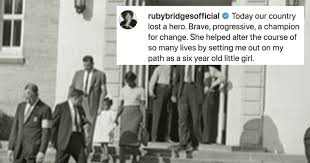
from the official Instagram of Ruby Bridges
And what I chose to profess was simple, but it felt right given the focus of the course. It was having them look again at the picture of Kamala Harris alongside a silhouette of Ruby Bridges. It was talking about Dr. King’s words, that the moral arc of the universe is long, but it bends toward justice. It was showing them a picture of Ruby Bridges’ mother, Mrs. Lucille Bridges, and talking about her vision for her daughter to get an education and using that link to remind them that the personal is political and the political is personal. It was showing Ruby Bridges’ Instagram post from the week before, sharing about her mother’s passing. It was talking—again— about the fact that the moral arc of the universe is long, and it bends toward justice…and also, we are the ones who bend it. It was asking them to rest up over break and come back refreshed, because as the words of Ella Baker remind us, we who believe in freedom cannot rest until it comes.
Ella’s Song (We Who Believe in Freedom Cannot Rest) is something I have been listening to on almost constant repeat lately. It was written by Dr. Bernice Johnson Reagon who was a founding member of the SNCC Freedom Singers and who also founded Sweet Honey in the Rock. Sweet Honey in the Rock has the beautiful original rendition, and the Resistance Revival Chorus released a version in 2020 for Juneteenth. They are both powerful. You can learn more about Sweet Honey in the Rock here https://www.npr.org/2018/01/16/577690049/we-who-believe-in-freedom-shall-not-rest and here https://sweethoneyintherock.org/ I will keep this on my internal playlist into 2021 and beyond, to remind me what I am professing.
My semester just wrapped up; we have been on a compressed schedule due to Covid and so my exams just finished and I am in the midst of papers, presentations, and all the other good things that come from a semester done well.
This semester I have taught the First Year Seminar class. It is the first time I have ever taught a freshman required seminar. The course has a number of moving parts and I am not sure the Covid context of 2020 was the optimal time for me to teach this for the first time. Yikes! I will definitely do some things differently next time. But….one thing that I would do again is keep my theme (Yes We Can! The Power of Nonviolent Resistance) and I would keep the text I chose, and I would keep the final assignment.
Today I am going to share the text and why I love it. And then if I ever when I finish grading, I will share the final assignment and what I learned from students about who and what inspires them for being change seekers and change makers.
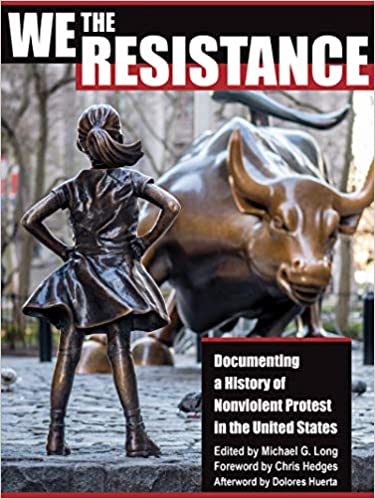
This book is amazing. It is a chronological history of resistance movements in the US, and actually begins with events that happened when the US was a group of colonies, including abolitionist work in 1657. The book is current, too, as the last section is about resistance work during Trump’s administration. Aside from the comprehensiveness of the book, the thing I love most is that it isn’t the work of an author who is telling us about the events but rather it is a collection of individual voices and original documents from each era. The book is a collection of letters, speeches, journal entries, organizing documents, newspaper articles, and more. There are many names and campaigns I had heard of, of course: Angelina Grimke, Mary Church Terrell, W.E.B. DuBois, the SNCC, the Freedom Rides and United Auto Workers Strike just to give a sampling.
There were names and campaigns that were new to me too: Words from an unknown slave, Chief Joseph, Women Strike for Peace, Philip Randolph, Robert Lowell, Appalachia Rising and Dulce Garcia.
I even saw a name of a former student of mine: The Human Impact of the Muslim Ban, by Dina El – Rifai. It gave me all the feels to see her name in print, and to know how her words and her work impact others.
I am excited to go through this book again next semester (as I am using it for a new elective on Social Movements and Social Change) and build more specific modules around some of the readings.
The picture of Vice President Elect Kamala Harris walking alongside the shadow of 6 year old Ruby Bridges has been giving me life the past few days.
Artist Bria Goeller worked with T-shirt company Good Trubble to create this image
I have taught three classes this week and shown the picture in 2 of them. In one of the classes (a freshman seminar focused on social change), no one new the shadow of Ruby and in the other class (a junior policy class of social work majors) only a few people did.
I talked for a bit about the women in the picture, and made the connections for them that I had hoped they would make for themselves, about the journey toward civil rights, justice and the lived out illustration of Dr. King’s quote that “the moral arc of the universe is long, but it bends toward justice”.
This realization that the students didn’t know Ruby Bridges like I thought they would made me think of a saying I heard a long time ago, that there are two gifts we should give our children. One is roots, to remind them where they are from, and the other is wings, to show them what they can become.
I don’t think of my students as children, but this principle still applies to what I wish for them. I want them to have knowledge (roots) of history, particularly the parts of history that too often get glossed over. I want them to have a vision (wings) for the gifts (work, commitment, character, seeking justice, etc) that they bring to the world.
Due to covid, my regular semester of classes actually ends this week…though there has been nothing regular about this semester! But I have decided for these two classes (freshman seminar focused on social justice, and my junior policy class where we have examined many policy issues through the lens of equity), I am going to re-visit this picture on the last day and add on a bit of the “roots and wings” discussion. I am going to invite students to do some journaling for a few minutes to think about their own roots and wings. Who has inspired them in their social justice work? What qualities do they want to grow in themselves that will help them in their journey of seeking justice? What have they learned this semester that they didn’t know before? How do they see themselves building on this knowledge? What else do they want to learn? How can they be in solidarity with others?
As I approach the end of a semester and the beginning of another: another semester, another year, a big birthday coming…I will be asking myself these questions as well.
This semester I teach a policy class on Tues/Thurs. I have a few “in person” students but mostly they are on Zoom, and so I have been challenged all semester with how to find ways for people to participate that doesn’t depend on a camera or their willingness to unmute themselves. I knew that today I wanted to give some space for people to talk about their questions and thought related to the election. I also wanted to “use time wisely” since we are very close to the end of the semester. Conveniently, because I planned it that way, their chapter reading for today was a review on the political process in social work. Voting, yes, but also problem identification, generating solutions, enacting legislation, implementing policy and evaluating policy.
At the last minute (last half hour before class) I got an idea. I used a padlet (my favorite pandemic teaching tool) to ask them to identify questions they had about the election, what they were thinking about as we wait for the final results, and any thoughts they had about the political aspect of social work in general. (At the beginning of the semester I had taken a poll and only half of my students agreed with the statement that social work was a political profession. So, I wanted to see if their ideas had changed.)
They padlet participation was just shy of 100% and I can’t ever say the same for in person classes, so that was a win. One person said, simply, they were putting their hopes in Nevada. Some people wrote paragraphs.
We talked about some of the responses in class, and I told them that I would review them prior to the next class and we could keep discussing, and I would share resources, etc. We talked about the electoral college, about the attempt to find shared values, about our concern for human rights. I tried to hold space for the anxiety in the room, as that was named in alot of the padlet posts.
For a spur of the moment idea, it turned out pretty well.
Prior to this year, the last time I dressed up for Halloween I was Dorothy Day. My Facebook memory post for that day reminds me that I had at least 15 conversations with people about DD that day, I passed out at least 50 copies of my newspaper, and only had one person ask me if I was a hobo. See the picture below, and you can tell how their question was a valid one.
Me, a very tired Dorothy Day…with my own version of The Catholic Worker, letting people know about poverty and affordable housing issues in Nashville,
I began to know of Dorothy Day several years ago, when my family and I started spending time with the Catholic Worker/Radical Christian community in Bloomington, Indiana. I have gradually learned more about her over the years, and everything I have learned fascinates me, inspires me, and helps me think about what it means to live out my faith in the context of a broader political and social system that I don’t always love or agree with.
As I have been thinking about what might happen in the wake of the US presidential election on this coming Tuesday, I have been thinking more about Dorothy Day, and how I am called to live in the world, no matter who wins and loses on Tuesday.
In case you don’t know much about her, I think it important to give a little background. This information comes from my brain over the years, and a variety of sources, including Wikipedia. Don’t tell my students 🙂
Dorothy Day was born in 1897. As a young girl of 8, she survived the San Francisco earthquake, and talked in later years about the memories of seeing people help each other in the rubble. Her father was a journalist, and during a period of his job loss, she and her family lived in a tenement in Chicago. It was this experience that opened her eyes to what it was like to live in poverty.
As her father’s job situation changed for the better, they moved elsewhere in Chicago, but Dorothy would go out for walks throughout the city. She said that this time gave her direction toward her vocation, and that she felt the calling of being linked to the lives of people who were struggling. This direction toward her calling was also shaped by the books she read, including The Jungle, which is set in Chicago in the meat packing industry, which was another backdrop for her long walks throughout the city.
She won a scholarship to college at the University of Illinois, but left after a couple of years to move to New York and work as a journalist. She marched and demonstrated in front of the White House for women’s right to vote in 1917, and she was arrested for this, serving 15 days before being released. While this was her first experience with incarceration, it would certainly not be her last as she was arrested many times over the years for her social justice work, and she served her last sentence in 1973 at the age of 75 for her protests with farm workers in California.
Sometimes I have asked students just to look at her in that moment of solidarity with farmworkers (below) and tell me what they see. I always love their responses, and my question to them is usually this: How do we get to that place of peace and resolution amidst chaos and injustice and violence in our world today?
Photo from New Yorker, via Bob Fitch Photography Archive / Department of Special Collections / Stanford University Libraries
I think the answer to this question of how we get there is rooted in some of Dorothy Day’s work in her “Catholic Worker” years. Particularly, the ideas of personalism, non-violence, the works of mercy, and “the little way” are key.
Personalism is “taking personal responsibility for changing conditions, rather than looking to the state or other institutions to provide impersonal ‘charity’ (https://www.catholicworker.org/cw-aims-and-means.html)
Nonviolence includes “refusal to pay taxes for war, to register for conscription, to comply with any unjust legislation” and includes “participation in nonviolent strikes and boycotts, protests or vigils” (https://www.catholicworker.org/cw-aims-and-means.html)
Works of mercy are grounded in the Gospel. Day’s vision for Catholic Worker houses of hospitality was that these would be places to practice acts of love and radical hospitality. She believed that these acts were necessary “so that the poor can receive what is, in justice, theirs: the second coat in our closet, the spare room in our home, a place at our table. Anything beyond what we immediately need belongs to those who go without” (https://www.catholicworker.org/cw-aims-and-means.html)
Finally, “the little way” is an idea that Dorothy Day learned from the writings of Saint Therese of Lisieux. The concept of “the little way” is similar to personalism, but with the reminder that change starts with me, and that no action is too small if it is an action that is rooted in justice. As she wrote later, “a pebble cast into a pond causes ripples that spread in all directions”.
These are ways I can live more intentionally in the world. Even though the directions aren’t always easy or convenient or clear, it is work that I can do while simultaneously working for change at larger system levels.
So…whatever has happened in the election world, when I wake up on Wednesday I am planning on living like Dorothy and encouraging my family, my faith community, and my students to do the same.
Like many teachers this semester, I am teaching in what is called a “hyflex” model, which means that there are students in the “zoom room” at the same time that I have students in the physical space. My classroom for this particular course only holds 8 students (to maintain appropriate physical distance) so there are always more students on the computer than in the room. We are over the midpoint of the semester and even in the best of times, this is the point at which people are tired and yet still have a lot of work to do. And this is not the best of times: an ongoing pandemic, a contentious election cycle, and all the other things that people have going on makes for a lots of possibilities for stress.
I started class today by inviting students to share a song that is a “go to” for them when they need some peace, or a smile on their face, or a bit of joy. I had several zoom students submit songs in the chat room, and the students in the room shared some as well. I compiled the playlist and posted it on our course Blackboard site so that students could access it. I have heard from several students throughout the day how much they appreciated this. A small change of pace, a chance to connect with peers in a different way, and a gentle reminder from their professor that it is good to stop and reflect on things that bring us joy.
In 1964, Dr. King was invited to write an opening program for the first jazz festival in Berlin. You can read more of the backstory and details at the link below, but in reading this I was struck by Dr. King’s discussion about the power of music. While he was particularly discussing jazz and the blues, I think its relevant for all forms of music:
And now, Jazz is exported to the world. For in the particular struggle of the Negro in America there is something akin to the universal struggle of modern man. Everybody has the Blues. Everybody longs for meaning. Everybody needs to love and be loved. Everybody needs to clap hands and be happy. Everybody longs for faith.
I see this truth every day: Everybody does long for meaning. Everybody does need to love and be loved. Most everybody I meet would like to clap hands and be happy. I do think everybody longs for faith…even if their faith doesn’t look like mine.
Here is the list of songs that bring my students joy, or at least a smile. Shared willingly in our strange-pandemic-hyflex-classroom. Building community one zoom session at a time.
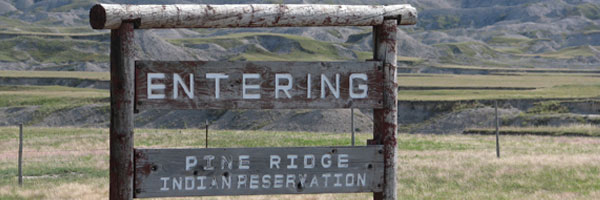
A few years ago I had the opportunity to travel with a colleague and some students and my family on a Maymester trip out west. We spent a week on the Pine Ridge reservation in South Dakota, where we were able to learn from elders and other leaders about the land and some of the ways of life and culture of the Lakota people. Throughout the rest of our travels we also were able to visit the Crazy Horse memorial, the Wind Cave, the Little Bighorn Battlefield site, and Devil’s Tower. Spending time on native land was humbling for me, and eye opening, and every day I realized how much I didn’t know about Indigenous peoples.
One of the books we asked students to read before leaving for the trip was Neither Wolf Nor Dog: On Forgotten Roads with an Indian Elder by Kent Nerbern. The title of this blog post comes from the book. It is a powerful book for hearing stories from a Lakota elder as told to a white author. It is also powerful and humbling to see the author struggle with how to really hear the stories, and not to whitewash them. The book is a good teaching tool to better understand Native culture, It is also a good reflecting tool for members of the majority culture to ask ourselves what stereotypes we have been believing, and to ask how we have been complicit in cultural appropriation. (There are other questions we can ask ourselves as well, these are just the first two that come to mind!)
I have been thinking of this book lately (and apparently there is a film version of it) because of the approaching day that many people recognize as Columbus Day. Certainly, for most of my life that’s how I have referred to this Monday in October. However, I have been challenged in recent years to think about it as Indigenous Peoples Day. There are many reasons this shift is important but to me the most important reason is to stop glorifying someone who enslaved people and to recognize and honor instead the people who were here on the land when Europeans invaded it.
This of course is connected to the Indian Child Welfare Act. Originally passed in 1978, this legislation has been re-authorized regularly since then and yet there are still failures of the system in applying this law to Indigenous children and families, which further removes children from their culture in an already traumatic time. The National Indian Child Welfare Association is a great resource for all things ICWA: https://www.nicwa.org/
A few years ago I was looking for just the perfect short video to illustrate something in one of my classes. (The amount of time in my life I have spent looking for “just the perfect short video” on any given topic is, to quote a former student, redonkulous. Anyway, I digress…)
I don’t remember the topic of the video I was looking for, but the video I happened to come across was a powerful 17 minute documentary about the Selma to Montgomery march. This documentary was filmed by Stefan Sharff during the march itself, then lost or forgotten and eventually rediscovered a few years after his death.
Let us march on poverty (Let us march) until no American parent has to skip a meal so that their children may eat. (Yes, sir) March on poverty (Let us march) until no starved man walks the streets of our cities and towns (Yes, sir) in search of jobs that do not exist.
Let us march on ballot boxes, (Let’s march) march on ballot boxes until race-baiters disappear from the political arena.
Let us march on ballot boxes until the salient misdeeds of bloodthirsty mobs (Yes, sir) will be transformed into the calculated good deeds of orderly citizens. (Speak, Doctor)
Let us march on ballot boxes (Let us march) until the Wallaces of our nation tremble away in silence.
Let us march on ballot boxes (Let us march) until we send to our city councils (Yes, sir), state legislatures, (Yes, sir) and the United States Congress, (Yes, sir) men who will not fear to do justly, love mercy, and walk humbly with thy God.
(Address at the Conclusion of the Selma to Montgomery March)
Before you get to those words, however, you hear only the sound of some protest music of the era (“This Little Light of Mine”, “I’m So Glad”, “We are Soldiers in the Army” and “We Shall Overcome”) juxtaposed against the sound of helicopters above the marchers. It is both hopeful and ominous, a feeling that seems to fit well for this time.
I showed this video today, the day after the first Presidential debate. The class is one on nonviolent resistance to achieve social change, and today we finished up a two week look at the civil rights work done in the 60s. So, the video certainly fits in our context. However, I think it could be used as a general discussion starter for a number of classes or groups as we move deeper into the election cycle.
Here are some of the questions we discussed: What do you notice about the people marching? What do you hear in these sounds? And (this is the big one): what do you see represented here in the video that you hope for in the here and now?
This question sparked such good discussion. We talked about solidarity, and what it looks like. We talked about the flag and the whole range of things it symbolizes for people. We talked about the premise, and the promise, of the ballot box. We talked about the importance of all the elections, from the small local ones all the way up to the highest office in the land. We talked about the current Wallaces of our nation. We talked about the music of the resistance today, and my students said it sounds different, less hopeful, than the music of that era.
We talked about why we are still having aspects of this conversation, 55 years after the march from Selma to Montgomery.
We talked again about voting, and getting out the vote.







 Teaching (toward) the Beloved Community