“Memory knows before knowing remembers”— Using Memorial Drive: A Daughter’s Memoir in teaching about trauma

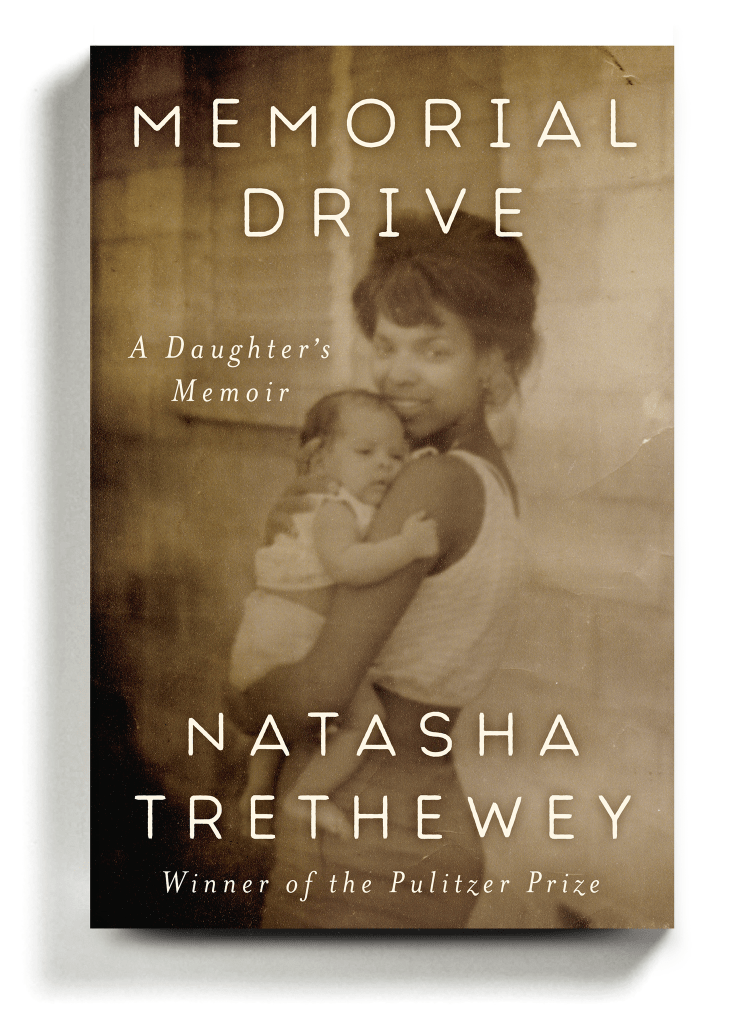
Memorial Drive: A Daughter’s Memoir is by Natasha Trethewey and it was published in 2020. The quote in the title of this post is from William Faulkner, used by the author in her work. I finished the book last week, as was assigned in an integrated learning community (ILC) that I am teaching in this semester. The concept of an ILC is part of our general education program, and every student is required to complete it.

Each ILC consists of two courses where a topic is explored through two different academic or professional disciplines. There are ILCs on wellness, ancient wisdom, diversity, and all kinds of other topics, including the one I teach in, which is on trauma and adverse childhood experiences (ACEs). The course I teach is a standard Human Behavior in the Social Environment course with a heavy grounding in how the experiences of ACEs and other trauma have the potential to impact individual development throughout the lifespan. The second course, taught my colleague who is a faculty member in the English department, is a literature and writing course. At the same time students are learning about human development and adversity (and resilience and post traumatic growth) from a social work perspective, they are also reading memoirs and novels that have a connection to trauma and we are able to apply the concepts we are learning in the social work class to the experience of the characters in each book.

The first full novel they have read this semester is Trethewey’s Memorial Drive: A Daughter’s Memoir. Trethewey is a former Poet Laureate and Pulitzer prize winner in poetry. She also, at age 19, experienced the trauma of her mother’s murder by her step-father. Prior to section of the memoir when her mother meets Big Joe (the stepfather) we learn a good deal of the author’s family history. In particular we learn about the marriage between her mother (an African American woman) and her father (a white Canadian man) in Mississippi at a time when miscegenation was still illegal, and we also learn about her grandmother and extended family history in the Delta region of Mississippi. We learn about the value her family places on education. We learn about the community she spends her childhood in, and how that environment shaped her and her identity.

After she and her mother move to Atlanta, we see through her eyes what “white flight” looks like, and we see the resulting impact on schools. We also meet Big Joe, who will become her step father. If you have ever used or seen the Power and Control Wheel and the Cycle of Violence, you will recognize all of his behaviors and the relationship dynamics.

Throughout the author’s adolescence, we continue to see her protective factors, including the relationship between her and her mother. We also see the limitations of the legal and criminal justice system with response to survivors of intimate partner violence. There are likely other ways you could use this book in teaching, but these are just a few.

And, throughout, the author weaves in her memories of that time with her current reflections and processing on the trauma. She finds there is power in remembering rather than avoiding. As she says toward the end “Even my mother’s death is redeemed in the story of my calling, made meaningful rather than merely senseless. It is the story I tell myself to survive.”

Happy birthday, Rosa Parks

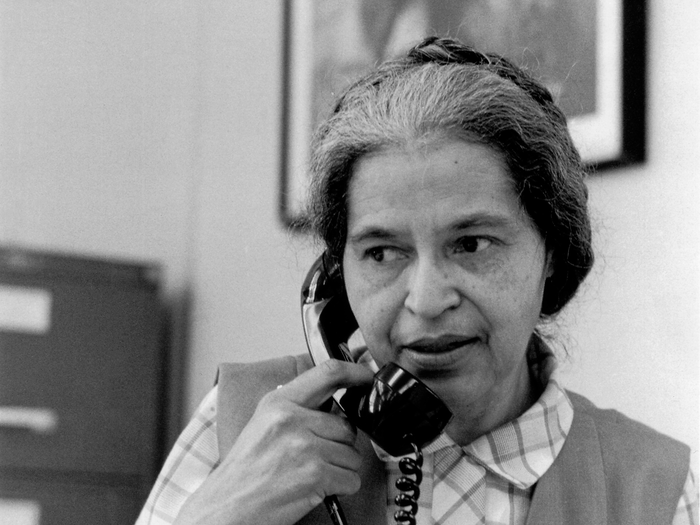
“Memories of our lives, of our works and our deeds will continue in others.” I am making a short post in honor of Rosa Parks’ birthday, born this day in 1913.

I learned about Rosa Parks in high school (maybe before, but I definitely remember high school) and I learned about her in the conventionally wrong way. I learned that she was tired, and finally having had enough, and decided not to give up her seat on the bus. And (so I learned) by doing this she unknowingly started one of the most well known campaigns of the Civil Rights Movement. This erroneous teaching strips the power away from not only this aspect of the movement, but also from the fact that Mrs. Parks was an advocate for many years before and after the Bus Boycott.

I was SO MANY YEARS OLDER when I started learning the fuller history, and I always try to make sure students know the fuller history as well. This recent opinion piece in the NYT is good, and I love the truth of the title: “The Real Rosa Parks Story is Better Than the Fairy Tale” https://www.nytimes.com/2021/02/01/opinion/rosa-parks.html

I also really like this piece from the perspective of her niece, and there are some photos in there I had not seen before: https://www.shondaland.com/inspire/a16022001/rosa-parks-was-my-aunt/

Finally, I always like to make sure my students (here in Tennessee) know about Mrs. Parks time at the Highlander Folk School, and here is a good history of that: https://snccdigital.org/inside-sncc/alliances-relationships/highlander/

Black history is American history

Black history is American history, all year long, not just in February. That being said, the textbooks and curriculum most often used in the US still minimizes the contributions of Black people with respect to scientists, educators, inventors, writers, and others. As Sachel Harris wrote in February of 2020, “With 80% of teachers being white and 40% of all public schools not having a single teacher of color, Black students across the country are being robbed of the opportunity to see themselves in what they’re studying” (https://tntp.org/blog/post/black-history-is-american-history-we-should-teach-it-that-way).

This February I am committed to being more intentional about incorporating Black history into my teaching (and into my own daily life, to know more as a human and to teach my children). To give me some much needed structure, I am going to use the prompts provided by Rachel Cargle on her Facebook page and website, which she has given permission for public sharing and use. You can access it here: https://www.patreon.com/m/thegreatunlearn I am sure I will not have the mental bandwidth or time to post here every day, but I hope to share in shorter form on social media and write longer posts here with information about what I have learned and how I have shared it with others.

I also found this helpful, the history of Black History Month, from O, The Oprah Magazine: https://www.oprahmag.com/life/a26077992/why-is-black-history-month-in-february/

And now, off to learn about the Middle Passage and Port Makers Project.

Centering other voices: The US and the 4th of July

This semester I am teaching a class called Social Movement and Social Change. It is the first time I have taught this course, though I had a bit of trial run last semester when I incorporated the themes of resistance in my section of the First Year Seminar. There are 25 students in class, a good mix of majors and experiences. We are using the book We the Resistance, which I have written about here before and this group of students is loving the book as well https://teachingbeloved.com/2020/11/21/we-the-resistance/.

Just as the freshman in my class said last semester, they are learning about events in our country’s history that they have not learned at all in history classes, or (if the topic has been addressed), it has been addressed in a whitewashed fashion.

The book includes Frederick Douglass’s speech “What to a slave is the 4th of July?” and none of my students recognized it as something they had heard before. After they read it, I shared this with them as well, of Douglass’ descendants reading his words:

from NPR, July 2020

We had such good discussion about this; so many students (I teach at a PWI) acknowledged they had never thought about this. A couple of my students of color (one Black, and one who is Japanese American) articulated their appreciation of having this discussion, and not assuming that we could all equally celebrate this day. We also got into discussions of what patriotism really looks like (this was a couple of weeks after Jan 6).

Later that week, I found these pieces that coincided with another part of history we were reading about: forced removal of indigenous people from their lands, and the colonization of the sovereign nation of Hawaii. Students were crushed to learn more about the Indian Removal Act, the Trail of Tears, and the coup against Queen Liliuokalani in Hawaii. They were also inspired to learn about the acts of nonviolent resistance that people demonstrated, particularly the Ho-Chunk nation in what would become Wisconsin, and the Queen’s actions herself, including demanding an audience with President McKinley.

So, to go along with the historical documents they were reading, I shared these pieces with my students: “We are not Americans, we will die as Hawaiians” (https://www.manoanow.org/kaleo/we-are-not-american-we-will-die-as-hawaiians-we-will-never-be-american/article_71f72884-be58-11ea-9984-ef5b951616bb.html) and a blog post from the National Museum of the American Indian, “Do American Indians Celebrate the 4th of July?” https://blog.nmai.si.edu/main/2017/07/index.html

At the risk of sounding like a broken record, students were in disbelief and embarrassed that they have not thought about these perspectives before. I told them that while they might feel like they are in a history class right now instead of a social work class, that it was important to understand the context and origins of the injustice we see in current time. Centering other voices is a key part of growing our understanding.

50,000 Coaches and Community Resilience

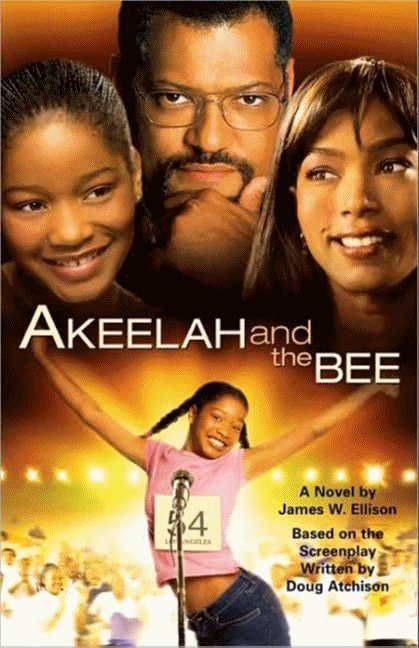
Last week, at the very end of our between semester break, my family and I watched Akeelah and the Bee. I had seen it before, several years ago, but loved it just as much this time around. If you haven’t seen it, the basic plotline is that Akeelah, a middle school student, is enrolled at an inner city school in LA with caring teachers but limited resources. Akeelah is having some attendance trouble, and yet she has a gift for spelling. After she wins the school spelling bee, the principal arranges for her to get some special tutoring from Dr. Larabee, a community member who, we learn later, is going through some significant grief.

I don’t want to give too much of the plot away in case you haven’t seen it and want to, but gradually through the movie we see some family challenges for Akeelah, including some conflict with her mom. At a point in which Dr. Larabee has stopped tutoring her, Akeelah’s mother says “I bet you have 50,000 coaches around here”.

I didn’t tune into that quote the first time I saw the movie, but it was impactful for me now. I teach a lot about resilience, and about the impact that one safe, stable, nurturing relationship on a child’s life. I also teach about community resilience, and about the community level programs and services that help build resilience in children. One of the favorite resources I share is the “Tipping the Scales” game, from the Center for the Developing Child at Harvard. You can access the game here: https://developingchild.harvard.edu/resources/resilience-game/ I also encourage students to check out this list and see what resilience based work is happening in communities near them: https://www.acesconnection.com/pages/geographic-communities

I usually introduce the resources above to students after they have read this piece on the prevalence of adverse childhood experiences nationally and by state: https://www.childtrends.org/publications/prevalence-adverse-childhood-experiences-nationally-state-race-ethnicity This is a helpful piece to re-visit when we discuss community resilience. What exists in their community to address these most common areas of adversity? What additional resources are needed?

To circle back: After Akeelah’s mother tells her not to be discouraged about losing Dr. Larabee’s help and that she has potential coaches all around her, the movie shows how true this is. It is feel good Hollywood, in this case, but there is truth in it. There are potential “coaches” and supports around us, if only we put priority into developing them.

Teaching with the “Do No Harm” podcast

I finished listening to the last episode of the Do No Harm podcast today. It was a hard podcast to listen to, emotionally speaking, and I am no stranger to working in child welfare. I listened while walking around the neighborhood over the last couple of weeks, and there were a couple of portions of it in particular that were so emotional I literally had to stop and catch my breath. So, before assigning to students I would talk with them in general about what they would hear, and give some more specific trigger warnings related to the episodes of Immediate Danger and Standard Protocol.

Some years I teach a course specifically on child welfare, and when I teach that again I will likely incorporate all of this podcast throughout the semester. I plan on using portions of it this coming semester in my class that covers lifespan development. At each stage of life we discuss how trauma and experience with other adversity impacts development, and we also talk about the impact that different systems (education, health, child welfare, etc) have on development. So, this podcast is clearly a fit.

Beyond the discussion of child development and how CPS systemic involvement affects family functioning, there is also an important discussion of race-bias, and systemic racism in the child protection system. This really comes out in the episodes The Fighter and The Cost. This would be a good pairing with the TED Talk referenced in this post on addressing disproportionality in the child welfare system: https://teachingbeloved.com/2020/07/06/reflections-of-a-baby-addict-we-have-to-address-disproportionality-in-child-welfare/

There were several times during this podcast I thought about my own kids. I am fortunate/lucky/privileged/blessed to have 3 healthy children and a supportive partner in a relatively safe community. But listening to this podcast I was reminded of times we were not vigilant enough when the kids were small: when they fell off a rocking horse, when they rolled off the bed, and when one, running through the house in the unsteady way toddlers do, gashed her head. And we were lucky that no one was hurt beyond bumps and a few stitches. And we were lucky no one assumed our behavior was neglectful or abusive based on the color of our skin.

Child welfare work is hard work. I wish front line workers had better supports (supervision, training, lower caseloads, etc). We need systemic change to better support workers, so that they can be better supports and advocates for the children and families with whom they work. And, this is not addressed in Do No Harm, but we also need to be able to provide support and assistance to families who need it. We know a lot about risk factors for abuse and neglect, and yet we do so little prevention. (Maybe a post for another day, but in the meantime here is my favorite site for understanding how we can work with children and families to build resilience: https://developingchild.harvard.edu/science/key-concepts/resilience/)

In the meantime, I hope you listen to Do No Harm. If you aren’t a social worker or a teacher or a parent, I still bet you would find value in the podcast, for helping you think about how you could work to be an advocate for children and families in your community.

Honesty

Today has been unsettling. Simultaneously surprising (can this really be happening here? In the US?) and yet…not surprising at all. The past 4 years and then some have been building to this moment.

I am thankful I have a few days to think before seeing a group of students. Between teaching a class on trauma, and teaching a class on social movements, there is no way I can authentically, honestly teach this semester without talking about the events of today. It isn’t possible.

Photo by Brett Jordan on Unsplash

One of my favorite contemporary poets is David Whyte. In his book Consolations, he writes: “HONESTY is reached through the doorway of grief and loss. Where we cannot go in our mind, our memory, or our body is where we cannot be straight with another, with the world, or with our self”.

What are the mental and emotional places I am reluctant to go? As a parent…an “American”…a Christian…a social worker…a professor?

What is the loss I am most afraid of? Employment? Relationships with family members?

What is complicity resulting in, besides dishonesty and the perpetuation of white supremacy?

In trying to figure out how to get straight with myself, with others, and with the world, here are a few voices I have been reading recently, and today:

James Bell, III https://equitymatterspodcast.medium.com/all-it-took-was-six-days-99c789a2c696

David Dark: https://daviddark.substack.com/

Brittany Paschall, and other voices on The Salt Collective https://thesaltcollective.org/

May we walk boldly toward honesty.

Bearing witness, and the 4 witness positions

I think I first heard the phrase “bearing witness” sometime in Sunday School as a child, in the context of one of the commandments to “not bear false witness” against my neighbor. I don’t know that I heard it in any other context until I was listening to my dissertation advisor, many years later, talking about her experience in South Africa and being present during part of the Truth and Reconciliation Commission. Bearing witness to the atrocities and the trauma, on community and individual levels, shaped her both personally and professionally.

There is power in bearing witness in the systemic sense. We have seen that in other countries, such as in South Africa with the TRC. We saw that in increasing measure in the US in 2020 particularly in the area of racism and violence, (https://theievoice.com/bearing-witness-to-injustice-from-ron-settles-to-george-floyd-nothings-changed/) and also in the area of poverty (https://www.poorpeoplescampaign.org/) .

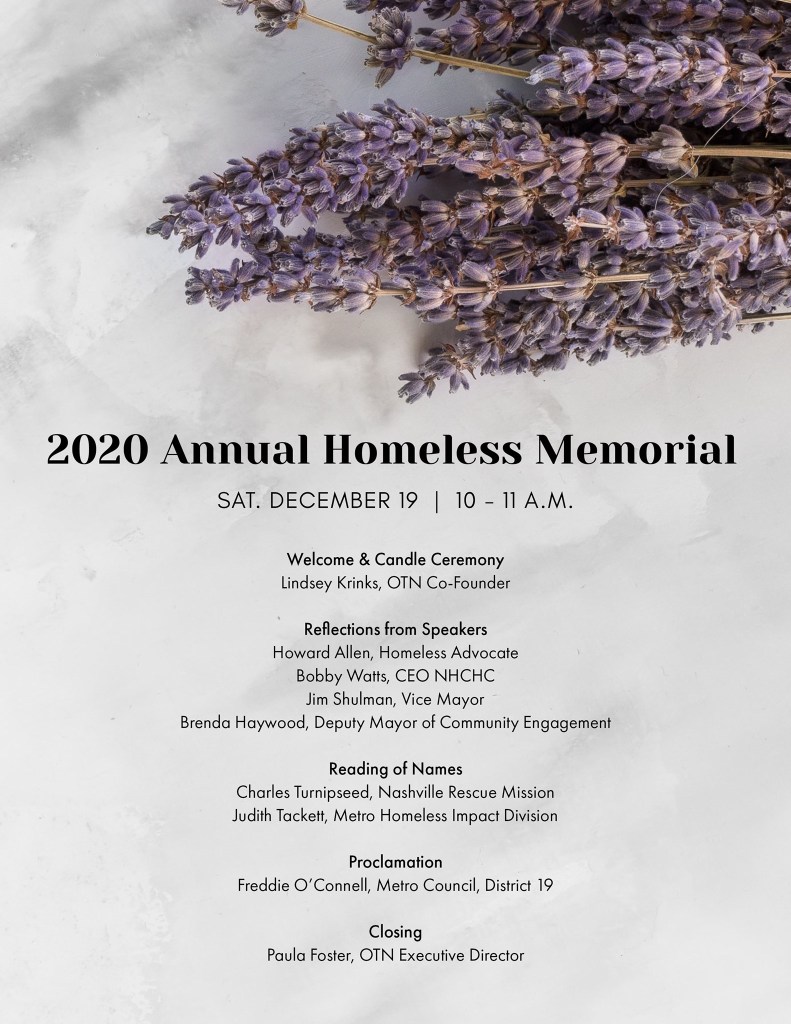
I have also seen in my own community the importance of bearing witness to the stories, including deaths, of people who are unhoused (https://www.nashvillescene.com/news/pith-in-the-wind/article/21145256/paying-tribute-to-those-who-passed-in-the-homeless-community)

There is also power in bearing witness in the individual therapeutic sense, such as in a formal helping relationship or an abiding and committed relationship https://www.psychologytoday.com/us/blog/meaningful-you/201312/the-power-and-strength-bearing-witness)

We are all called to be witness bearers, especially as we work on building the “Beloved Community”. As Emmanuel Levinas wrote in God, Death and Time (2000), “Bearing witness is not expressed in or by dialogue but in the formula ‘here I am’. ” However, we may not always be prepared to bear witness, to be present for people, especially when we are witnessing pain, suffering, and the recounting of trauma.

I came across the website of The Witnessing Project last year, and was especially interested in their concept of “witness positions” (http://www.witnessingproject.org/archives/the-four-witness-positions)

As you can see if you look at the 2×2 image, a person in position 1 is both aware and empowered. This person can bear witness most effectively because they know the importance of listening, of being present and of paying attention, AND they know what resources to bring into play and/or they know how to take action to help promote healing or (at least) an end to the pain. This is the position I want my students to be in, as well as the position I want to be in. If we operate from any of the other positions, we are either going to miss opportunities to bear witness, be ignorant about what to do, or feel overwhelmed.

I plan on using this image and some scenarios as an exercise to help my students think through their own ability to bear witness, and for us to think together about how we can be better witness bearers, in both our professional work and in our personal and communal lives.

Reflections on Dr. King’s Drum Major Instinct: Looking into 2021 and beyond

I came across Dr. King’s sermon “The Drum Major Instinct” about 4 years ago. He preached this sermon at Ebenezer Baptist Church on February 4th, 1968. This is two months before he was assassinated in Memphis. In this sermon he references what he would like people to say about his life during his eulogy, which makes it especially prophetic.

If you have never read this or heard this, I hope you delve into it. There’s so much in here about servanthood, consumerism, posturing, classism, the evil of supporting oppressors, all woven together in a richly told sermon. How I have been reflecting on it in recent days has been the part about what true greatness looks like, and how that relates to what I would want said at my funeral. Like Dr. King, I’d like for someone to say that I did try to feed the hungry. I’d like for someone to say that I did try to love and serve humanity. I’d like for someone to say that I helped people get into housing, and that I met people where they were, on street corners or under bridges or wherever they were. I’d like for someone to say that I raised my kids to seek justice and to hate racism and to be anti-racist.

One of the classes I am teaching in the spring lends itself to this kind of reflective exercise. In Senior Capstone, we look at professional issues and their big project is a practice evaluation associated with their field placement. But there is also space in the course (and direction from the institution) to have students think about their mission in life, and to think about how they will live out their calling as they move toward graduation and a different phase of life. I have never had students listen to this sermon in full before, but this year I plan to, and I will ask them to use it as a foundation for writing their mission statement and thinking about what it means to have a life well lived.

And, if I want those things to be said at my eulogy, what do I need to keep doing this year? What do I need to be doing differently this year? If my students want to live out their mission fully, what do they need to be doing differently? How can we encourage and support each other in this?

You can find the sermon in its entirety in written form here https://kinginstitute.stanford.edu/king-papers/documents/drum-major-instinct-sermon-delivered-ebenezer-baptist-church You can listen to it here:

Book review: Hidden Valley Road

One of my goals over the break between semesters is to read as much as possible! I have made good on that progress so far, and one book in particular has given me a number of ideas for how to use it in teaching. The book is Hidden Valley Road: Inside the Mind of an American Family by Robert Kolker. It is a non-fiction account of the Galvin family of Colorado. The Galvin family includes 12 children, ten sons and two daughters (who are children 11 and 12). Throughout their late adolescence and adulthood, 6 of the 10 brothers get a diagnosis of schizophrenia.

The brothers with schizophrenia spend significant time bouncing between state mental hospitals, community outpatient centers, jail, group homes, and their parents’ home on Hidden Valley Road. The brothers without schizophrenia have their own journeys (geographic, educational, spiritual) and all process their family stories a bit differently. The two sisters experience sexual abuse from one of the brothers, are isolated from each other as children, provide support for each other as young adults, and then grow apart again as they two process their family stories differently, and also as they realize that “healing” looks different for each of them.

In addition to the family narrative that spans 4 generations, the book provides a decades long look at the research that has gone into trying to understand the origin of schizophrenia as well as the mechanisms of trying to develop treatments and protocols in the context of both changing culture and healthcare systems.

Woven through both the narrative and the research is the age old question of the significance of “nature” (biology, genetics, etc) versus “nurture” (environment, parenting, culture, etc).

Feminism, patriarchy, family systems and secrets: they are all in this book. Risk, early childhood trauma, finding the right therapist and resilience: also in this book. Big pharma, the length of time that research can take, ethics and dilemmas in research what “informed consent” can really look like: here as well.

For social work educators: this book could be used in a research course, in a mental health class, in a individual or family practice class or in a HBSE class.

“Our relationships can destroy us, but they can change us, too, and restore us, and without us ever seeing it happen, they define us. We are human because the people around us make us human.” –Robert Kolker, in Hidden Valley Road: Inside the Mind of an American Family