A few weeks ago I learned that it was “Social Prescription Day”, celebrated annually on March 26. I learned of this in the evening of March 26, of course, kind of too late to prescribe myself, or anyone else, something social to do. (If you are new to the term, social prescriptions are “a systematic approach to addressing patients’ social needs by referring them to or implementing community-based interventions and facilitating social connection based on individual need”. You can see this quote in context, and learn more about social prescriptions, by checking out this case/commentary note from the Journal of Medical Ethics.

Anyway, when I was preparing my class for March 27 (a Friday, so a 50 minute class), I decided I could tie in the idea of social prescriptions to my last class of the day: Social Work Practice with Children and Families. That week on Monday and Wednesday we had been talking about isolation that many families experience, the challenges of building social and instrumental supports with families, and the ways that isolation can increase risk for child abuse and neglect at the family and community system levels. So, we spent the first 10 to 12 minutes of Friday’s class finishing that discussion and looking at a program meant to build informal support networks around families. (You can check out the Family Hui Initiative here…very cool!)
And then I told my students they could have the rest of the class time to do something that would either reduce social isolation (if they were feeling isolated) or they could do something to promote social connection with others or among others. I told them I would ask them the following Monday what they had done, so they couldn’t just blow the rest of class off and be done with it.
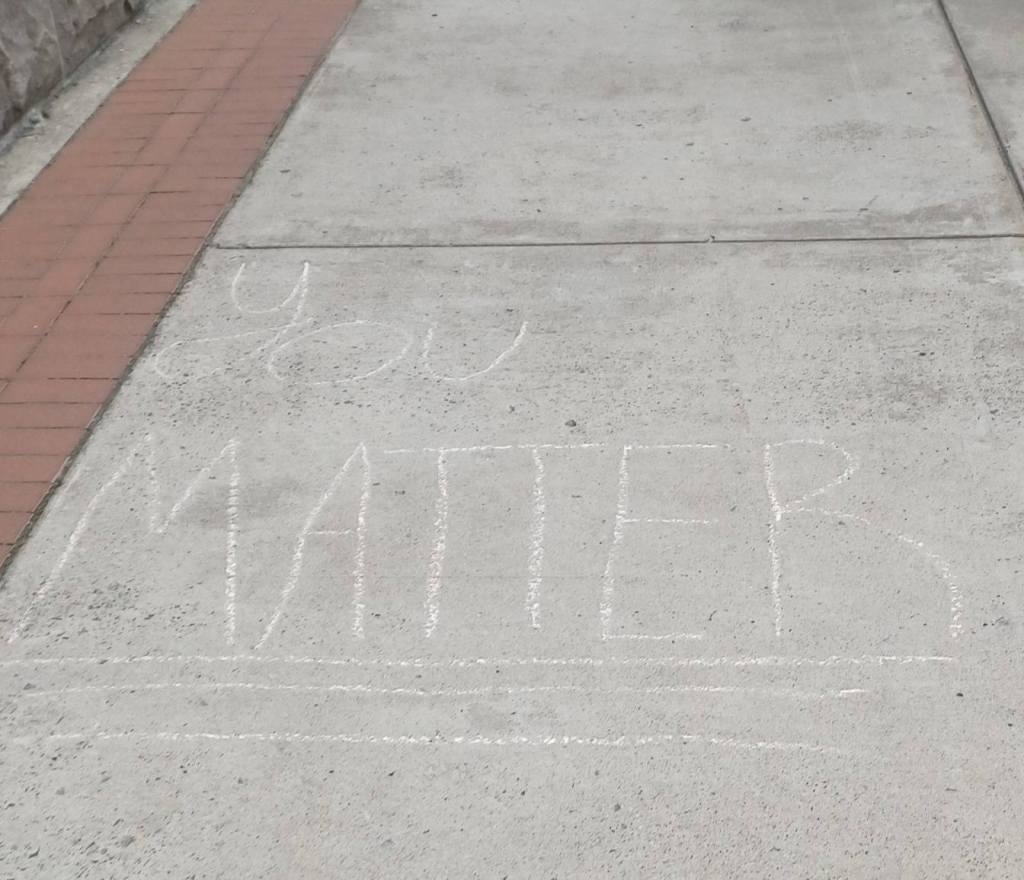
I had some students who decided to pair up and go take a walk on campus (and it was a lovely day for that, one of our first warm spring days). I had other students who opted to stay in class and do social things with each other: I had brought a basket and bag of things to class with me: play dough, coloring books and markers and crayons, legos, Uno cards, and a puzzle. I had a couple of students take the sidewalk chalk I had bought and go outside toward the sidewalks around the quad.
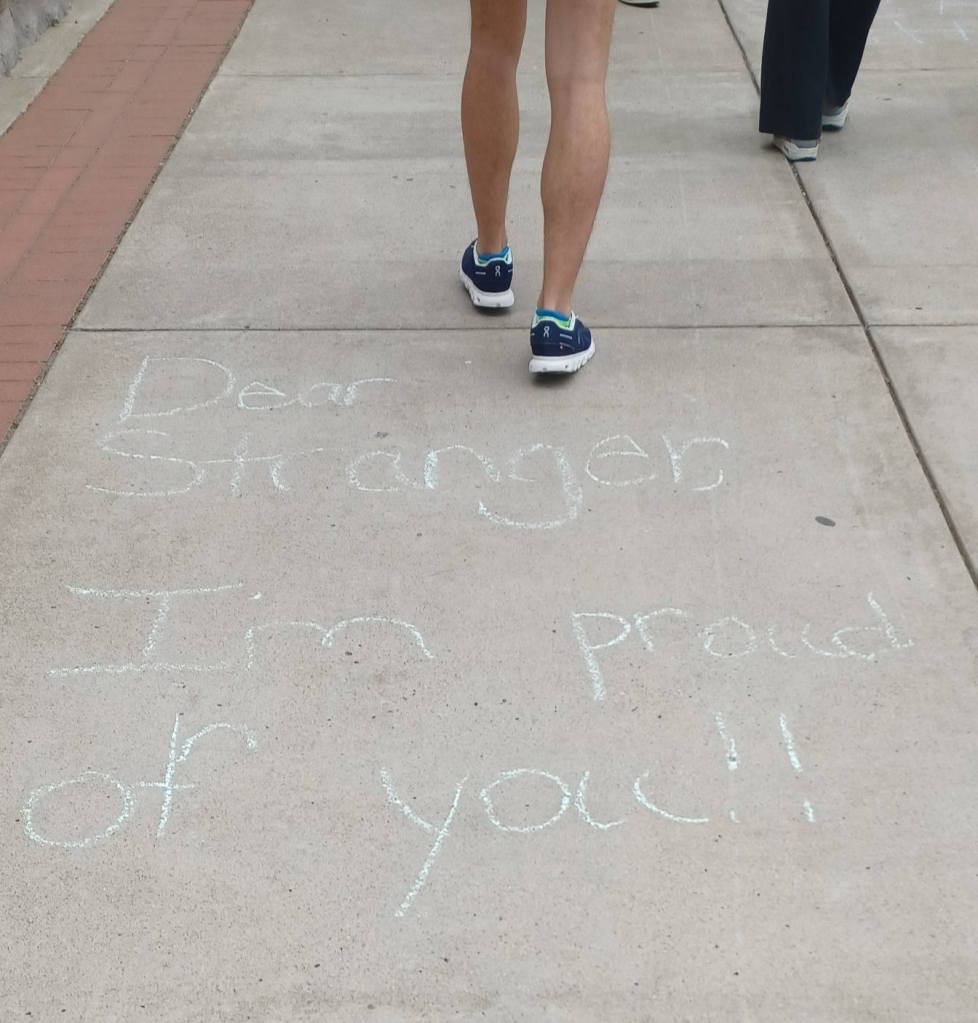
I played Uno with four students, including one student who has come late consistently all semester and is new to campus this semester. We had to encourage her to join us, but when she did, she came alive in a different type of way. While we played we shared some about our weekend plans, but mostly about who we had played Uno with in the past, so we had a chance to learn about people’s families. I checked in periodically with the other groups who were coloring, building a replica of the campus clock tower out of legos, and puzzling.
The group that took the sidewalk chalk outside appeared at the end of class to return my chalk. One student who is not actually in my class, but had gotten caught up in the activity, came along with the others to return it. He said, and I quote, “that was very satisfying”.
I left class and walked back to my office feeling pretty good about the use of the time, both how it had tied into our recent content and also how it seemed to help give people a little lift. It definitely gave me a little lift.
The next morning I happened to be looking at social media, and someone on campus who works in a different building had come upon my students’ chalk art and took a picture of it. She said she walked around that building twice just to get to see it again. Our “social prescription” day gave her a little lift, and I hope it did others as well.
Last week in church, in his sermon, our minister said “isolation is where faith goes to die”. In 2023, the Surgeon General declared loneliness and isolation to be an epidemic, and the health impacts have been compared to smoking 15 cigarettes a day.
Whether we are talking about isolation or loneliness, two different but related things, it is clear that it is on many minds and hearts of people, both those who are “helpers” and those who are feeling the feelings (and these may overlap some, too).
The 2025 Stress in America Survey was conducted by The Harris Poll and the APA in August of 2025. Results from a nationally representative survey indicate that 54% of adults surveyed felt isolated, and 50% felt they were left out or lacking companionship often or some of the time.
There are interventions to reduce loneliness, and some therapies have been shown to be more effective than others. Therapy isn’t accessible to everyone, though, and isn’t a “cure-all”. I do think social prescriptions are a valid and viable tool.
The good news is, you can “prescribe them” for yourself, for your students, your congregation, your extended family….be intentional about making time and creating space for interacting with others.
Both professionally as a social worker and personally as a mother and basic human, I care very much that people “find their people”. If you need help or encouragement thinking about how you can find *your* people, here are a few ideas: (1)look in the “Hip <name of your community> facebook page”. I can almost guarantee you someone has asked in the group before “how do I meet people?”. Check out their local advice. (2) If you are a believer, but not active in a faith community, be intentional about visiting some places. Find your fit. (3) Visit your local library, local community garden, local greenway. Read bulletin boards for gathering opportunities and see who hangs out in those spaces. (4) Take the risk and ask someone for coffee or a walk. (5) Volunteer at a cause you believe in, and you will meet some like minded people.
And learn to embrace potentially feeling awkward while you are in new spaces….I am the queen of this. Find someone who cheers you on in this (both the making time for people, the intentionality of it, and the embracing of the awkward).

