A couple of weeks ago I shared some of the resources I use when teaching my class on Poverty in the US. You can access part one here. I finished the course outline for the class earlier this evening and am ready to share the rest of my resources! If you are interested in seeing the whole syllabus, just comment on this post and we will connect.
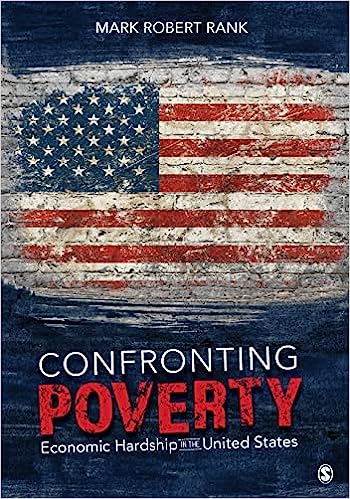
In the various iterations of this course over the years, there have been two texts I have leaned on to provide a bulk of the structure. One of these is A People’s History of Poverty in the US (edited by Pimpare) and the other is One Nation, Underprivileged: How American Poverty Affects Us All (by Mark Rank). I love the Pimpare book because it is written in the tradition of Howard Zinn and because it covers aspects of history not usually taught in traditional US history courses. I have always valued the Rank book because of the way he breaks down research findings into usable ways, but the last time I taught this course the data was already a little “old”. I was so happy to see a new Rank book, published in 2020, and this is providing the structure for my course this semester. It is Confronting Poverty: Economic Hardship in the United States. I was so excited to see that the majority of chapters in the book fit with the way I usually structure the course (looking at urban and rural poverty, looking at individual/cultural explanations for the cause of poverty but putting more weight on the structural concerns, etc.) There were additional chapters that I cheerfully added to my syllabus, including the very welcome one on organizing for social change. I have been reading the book as I have been working on the syllabus, and if this is a topic you want to learn more about or are teaching about, I heartily recommend it!
Aside from the book, there are some additional readings and resources I use to round out the semester. Some of them I choose specifically because they help my students understand the Nashville context more, and/or because they can see a local and real example of something we have talked about, such as a Universal Basic Income demonstration and the report of a local affordable housing taskforce.
A topic I dive a bit deeper into is the juxtaposition of faith/religion and poverty and politics and poverty. (And heaven knows, many times all three are in the mix.) To explore faith-based responses to poverty historically and current, I found a really interesting text called Charitable Choice: Promise and Peril in the Post-Welfare Era. I was able to download this through my institution’s library, and there are unlimited downloads so my students should all be able to access it at the same time. I plan to use a couple of chapters from this text. For exploring the political piece, I assign students to read the party platform statements of the Democrats, Republicans, Greens, and Libertarians. I ask them to reflect on what the party itself says about poverty (attributions, solutions, etc).
One area the Rank book doesn’t go as deep as I think is important is in the area of food security. Here is an open-access article from a public health perspective on programs and policies to support food security in the US. The USDA provides the most in-depth and user friendly information on rates of food security and food insecurity.

Finally, I also use some supplemental resources on class mobility in the US. Here is an informative open access article on how class mobility varies among different regions in the US and the Opportunity Insights portal will take you to more information on social mobility than you know what to do with (almost!). Particularly interesting here is the Opportunity Atlas where you can enter a zip code and get information on income, mobility, education, etc specific to your community. It is easier for me to navigate this than the Census website.
As you can tell, I am really passionate about teaching about this topic. It is so important for not just social workers but the general public to understand. We are all in this together.
 Teaching (toward) the Beloved Community