Every fall semester for the past 10 years I have taught a social welfare policy course. This is a course where social work majors and occasionally some social justice minors take a dive into a broad array of policy topics. This is a class where we discuss so many policy topics (child welfare, housing, food and nutrition, education, health and mental health, etc) that we are really just surveying the major policies that shape social work practice and life in the US today. Throughout the semester students identify a policy that they want to write their individual analysis papers on, so they do get a chance to take a deeper look at a particular issue that is interesting to them.
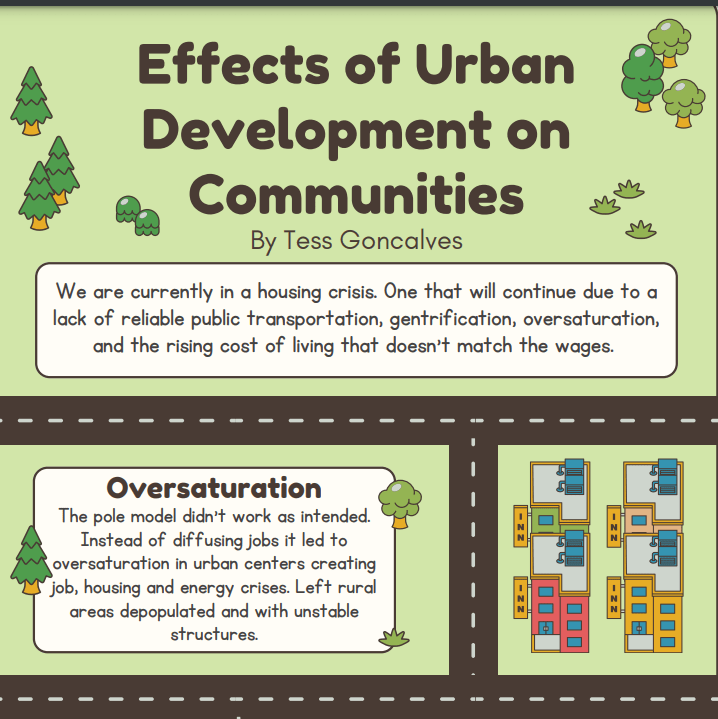
For every issue, I try to have students do some sort of application to practice translating policy language into real-world understanding. This can include things like having conversations with older family members about Social Security, talking with co-workers about finding insurance on the marketplace, planning a meal that fits the financial parameters of SNAP benefits, and more.
Toward the end of the semester is when we discuss policies related to housing and homelessness, including redlining, gentrification, vouchers, etc. In the fall semester, for the application part of this, I asked students to do a social media post or graphic that could be used to tell their friends/followers what they had learned. There were so many awesome responses to this mini-assignment, and I loved seeing how they were translating this information to others. We also had good discussion in the sense that doing these had raised additional questions for many of the students about things they didn’t fully understand, and also because they were getting questions and comments from their posts about them.
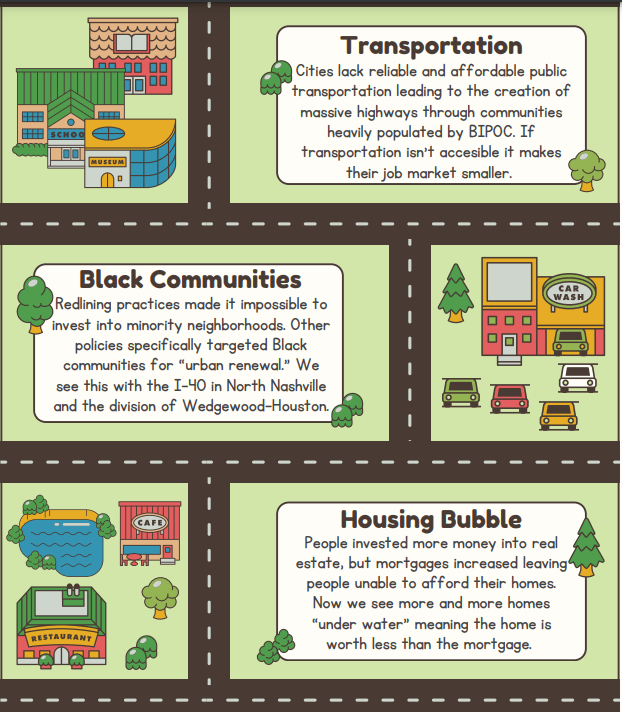
I asked one of my students for permission to share hers in a more public way, and she graciously agreed. This assignment was a good reminder for me that it is worth it to stress over the assignments, even the “little” ones, to make them as authentic and engaging as possible.

 Teaching (toward) the Beloved Community